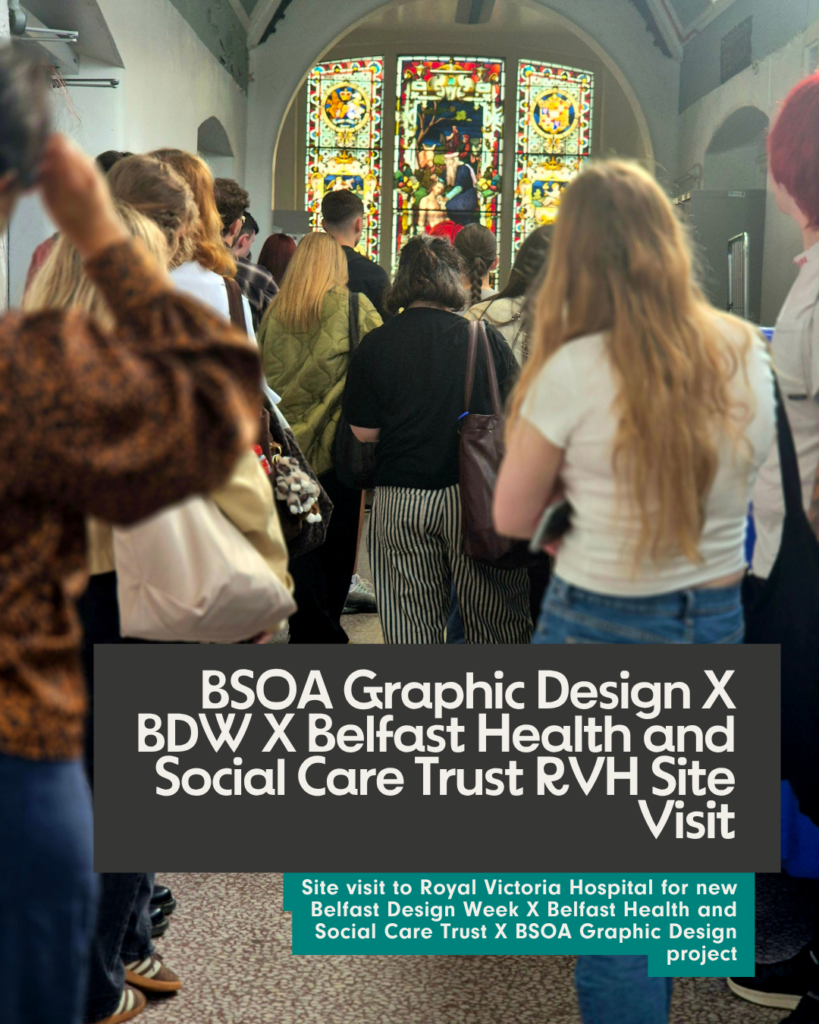
BSOA Graphic Design X BDW X Belfast Health and Social Care Trust RVH Site Visit
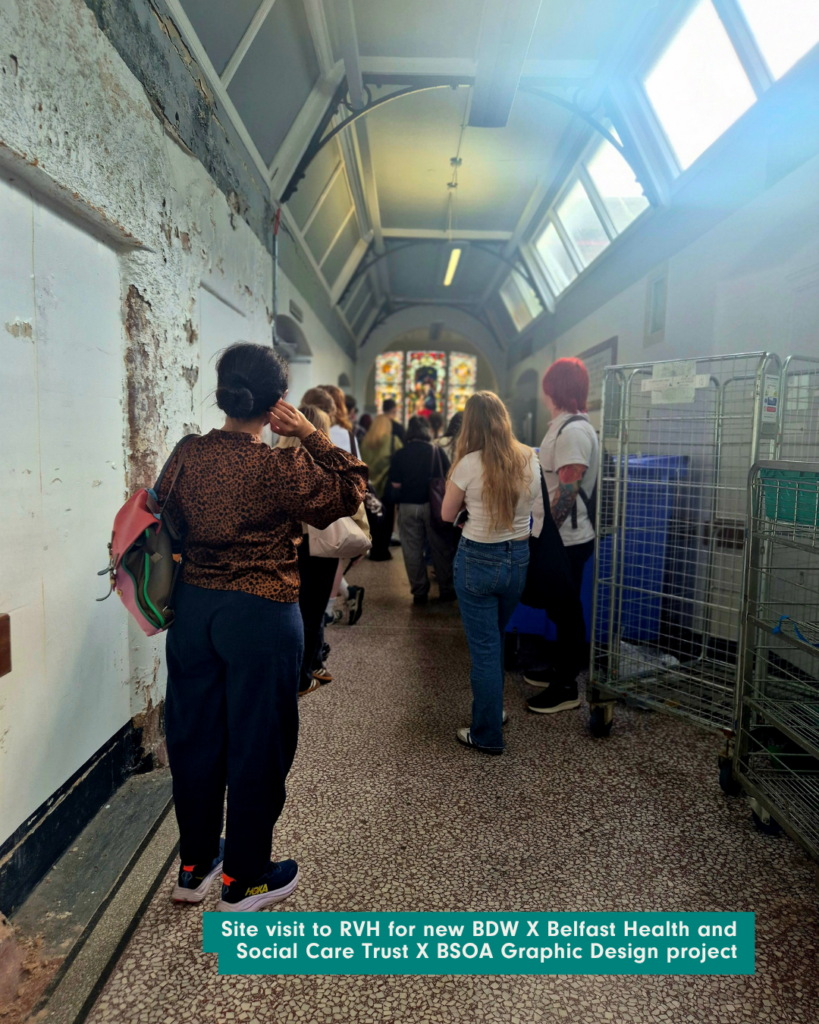
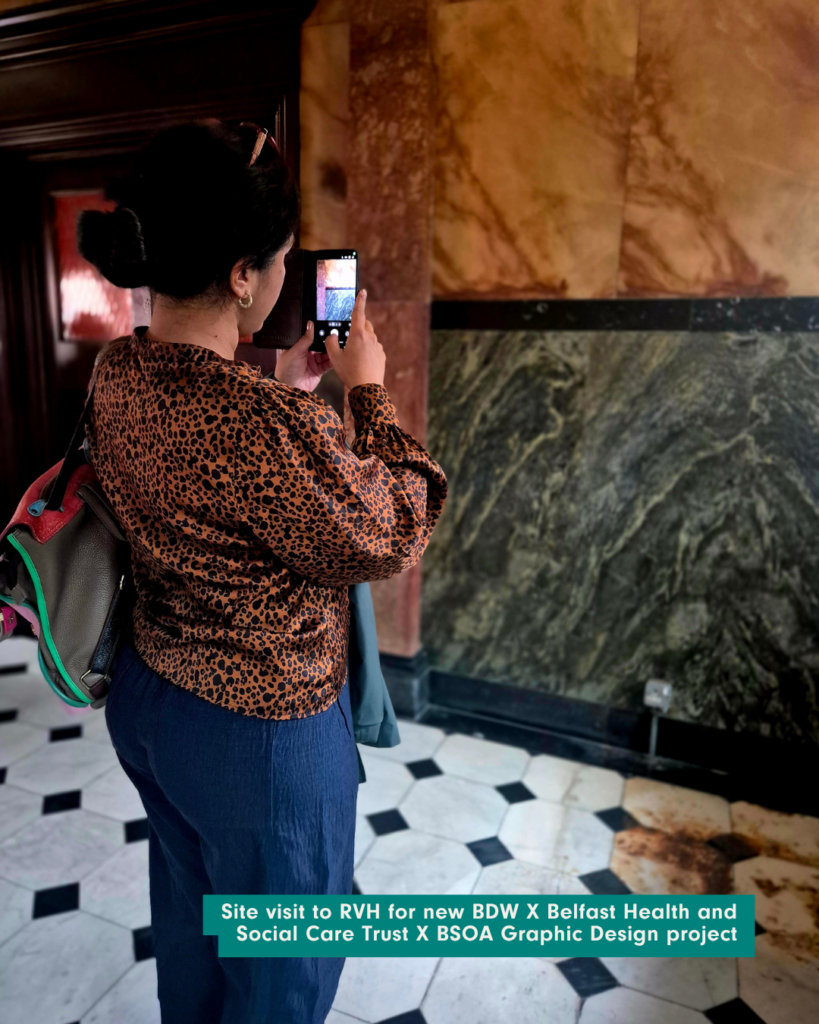
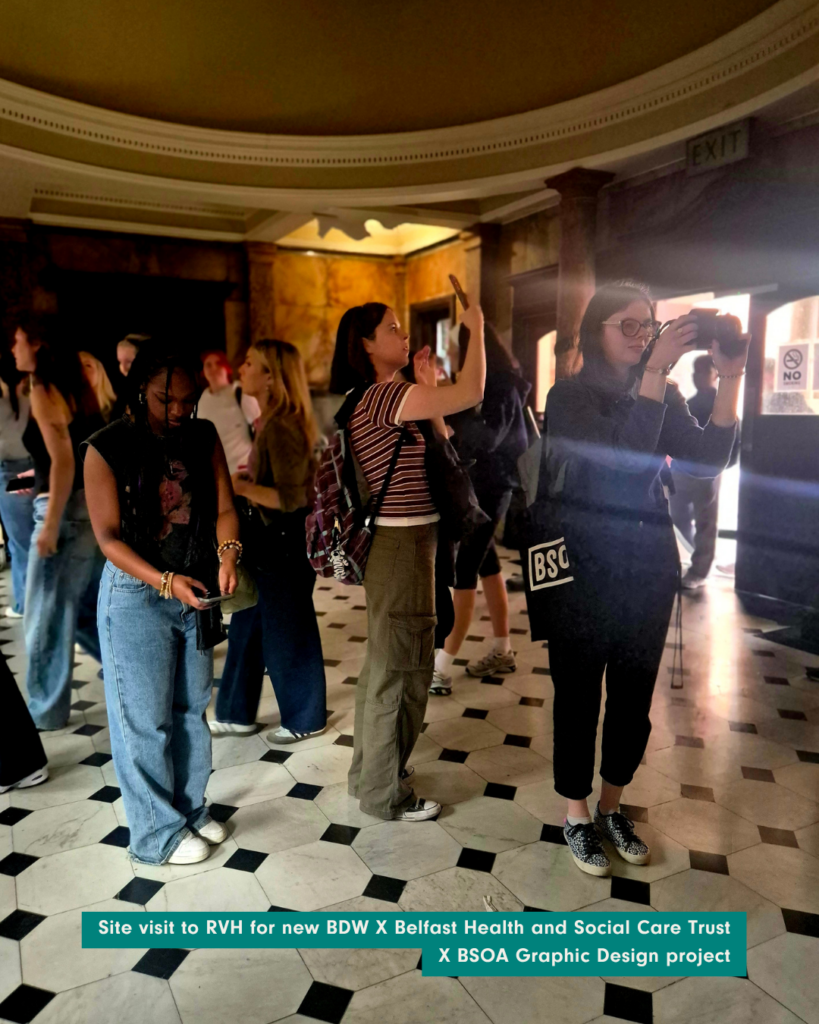
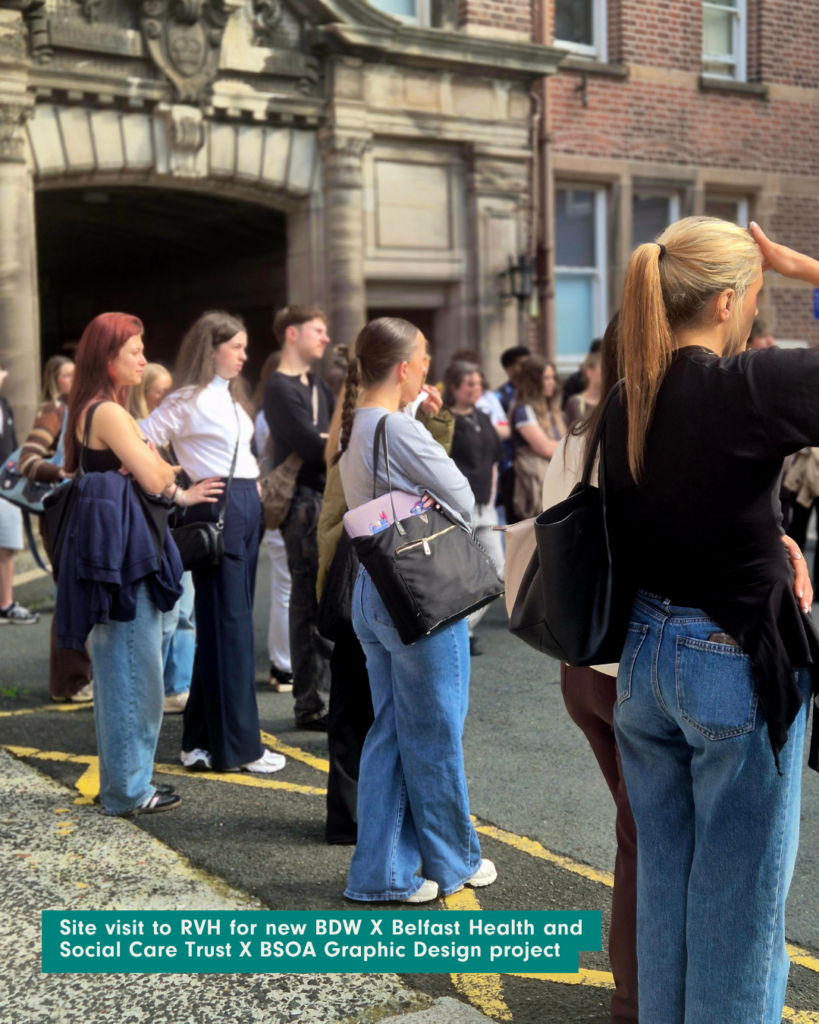
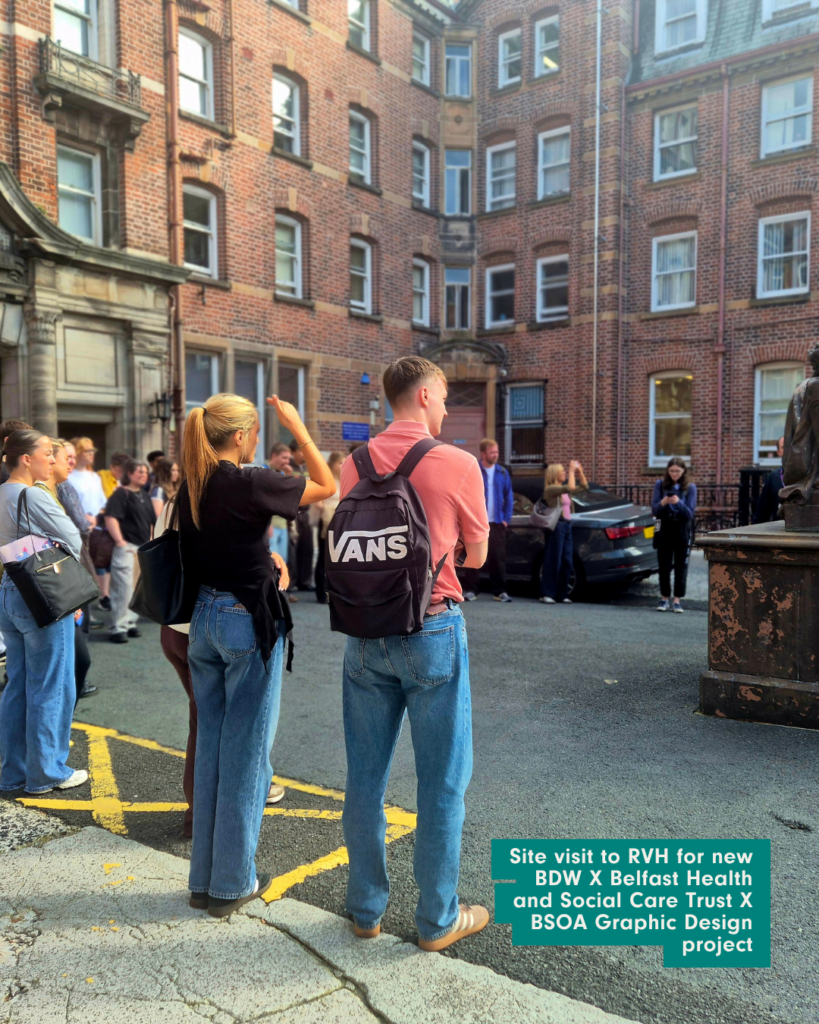
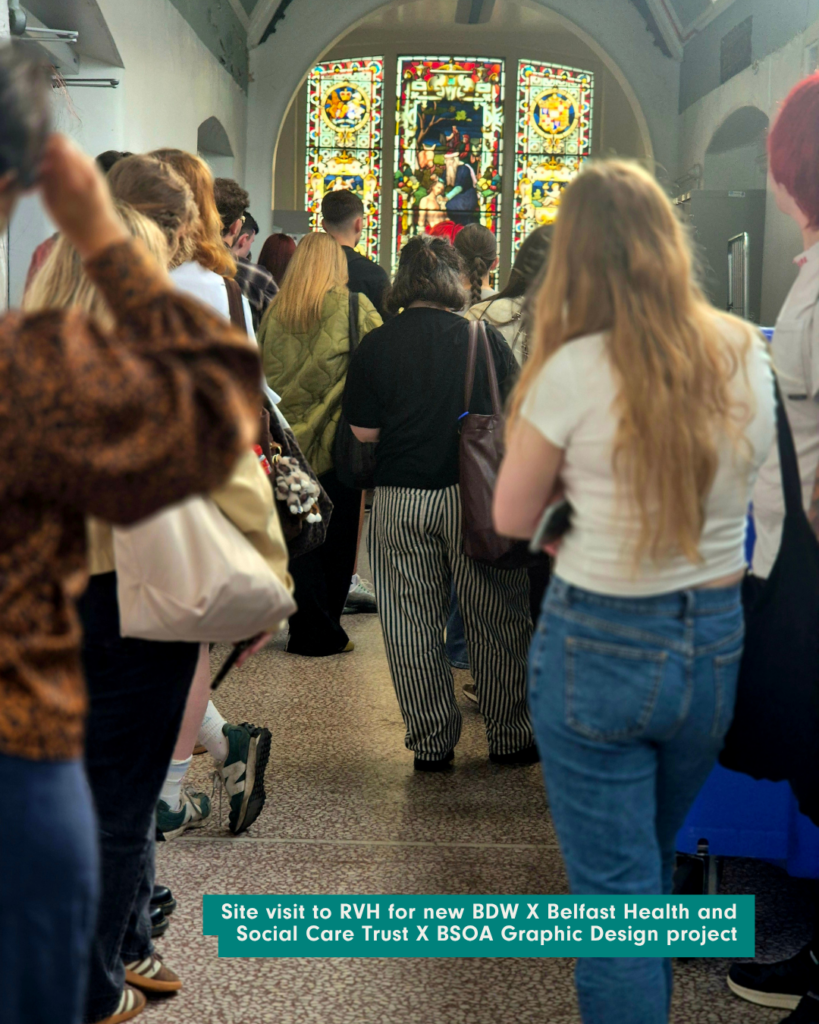
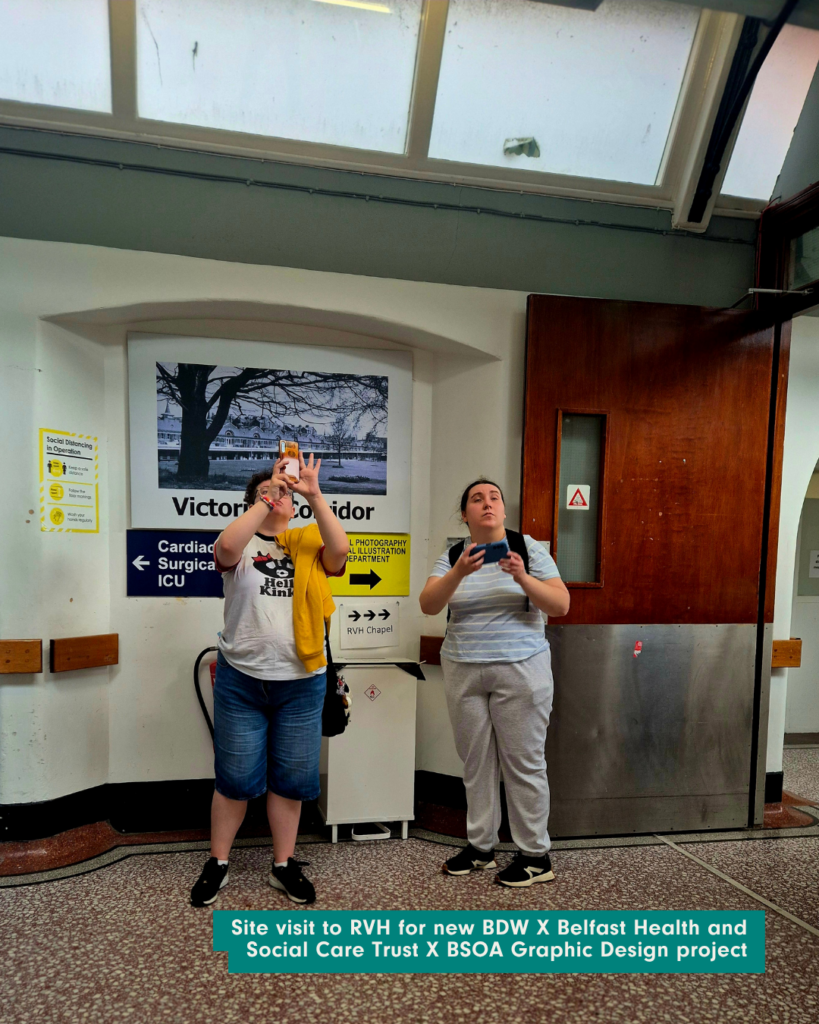
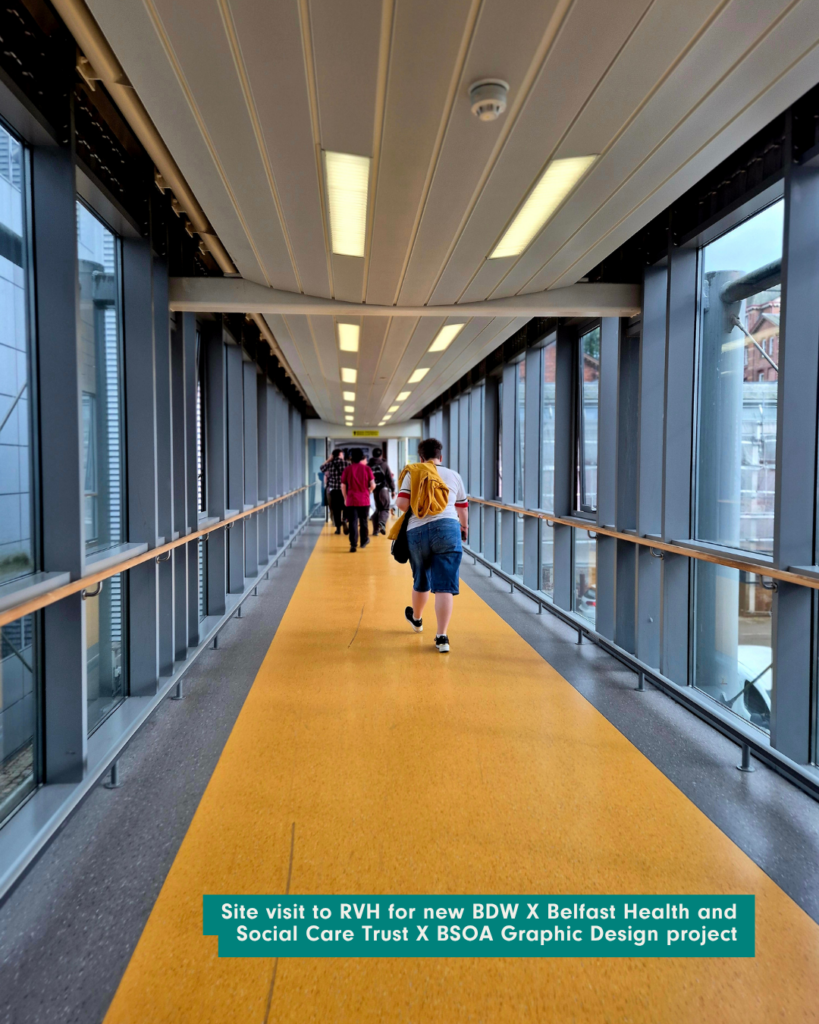
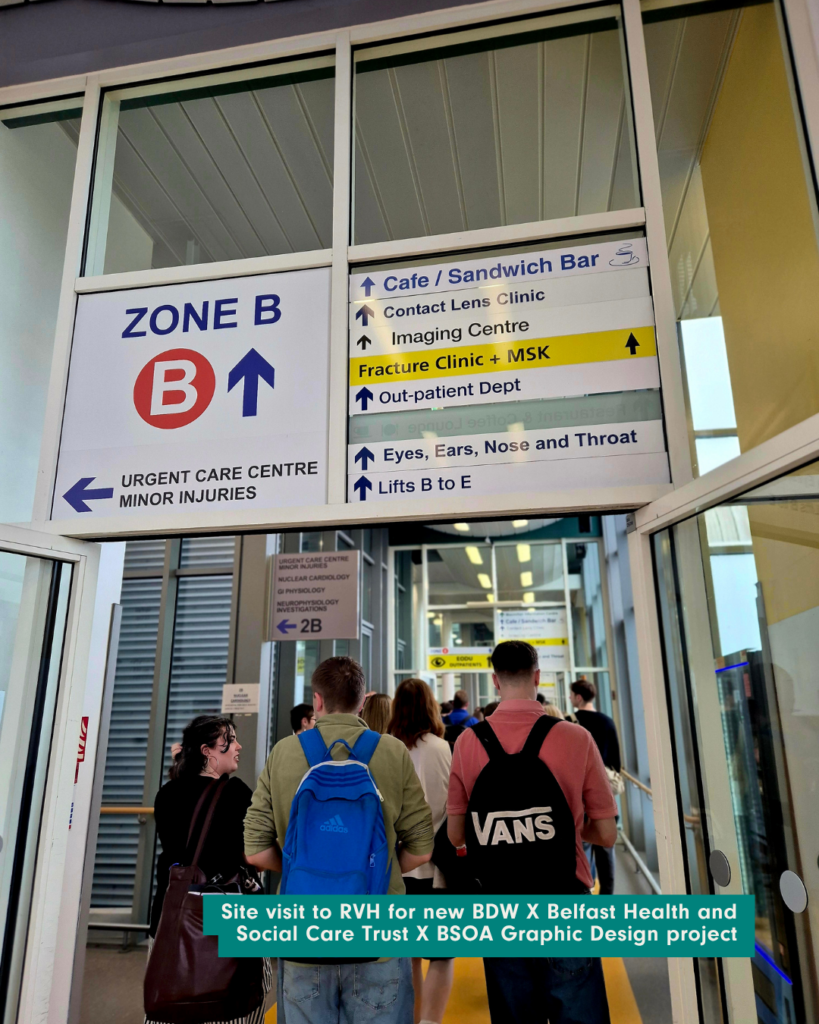
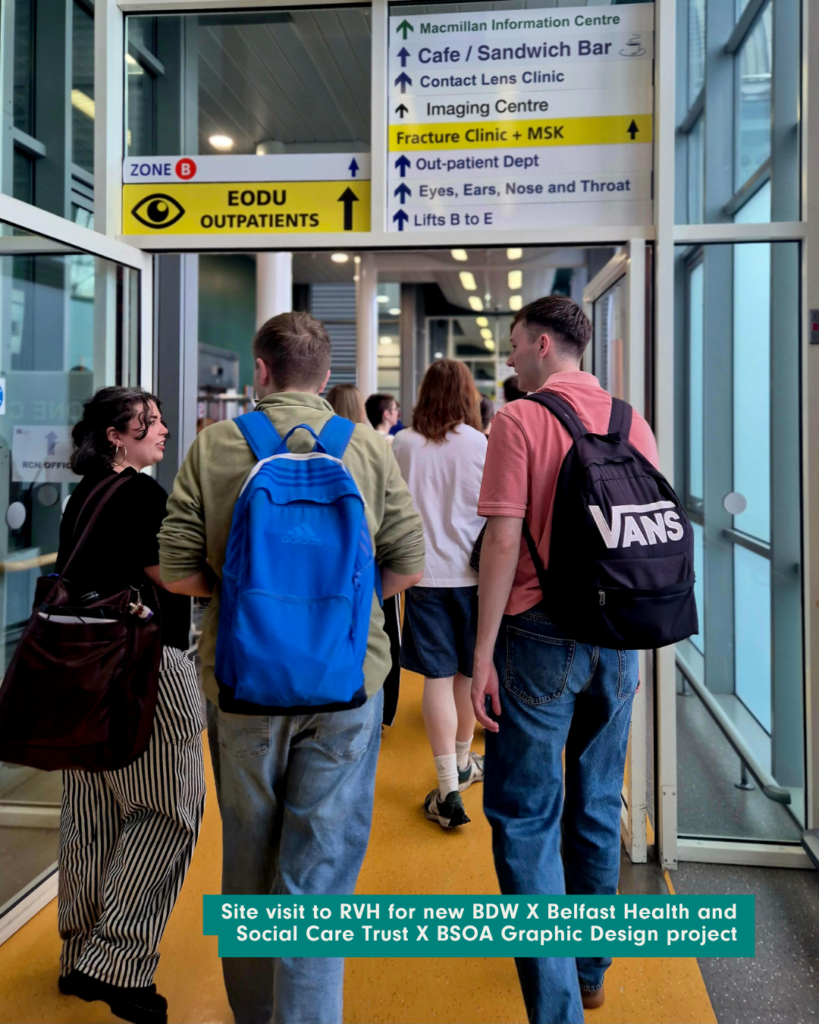
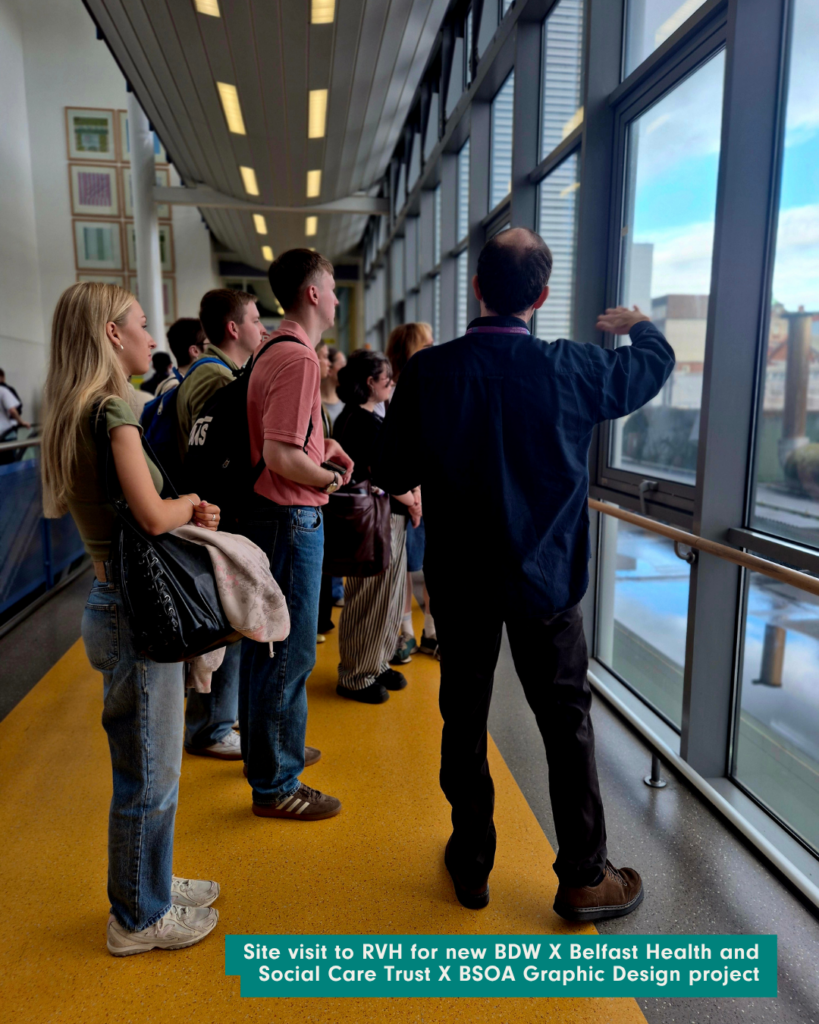
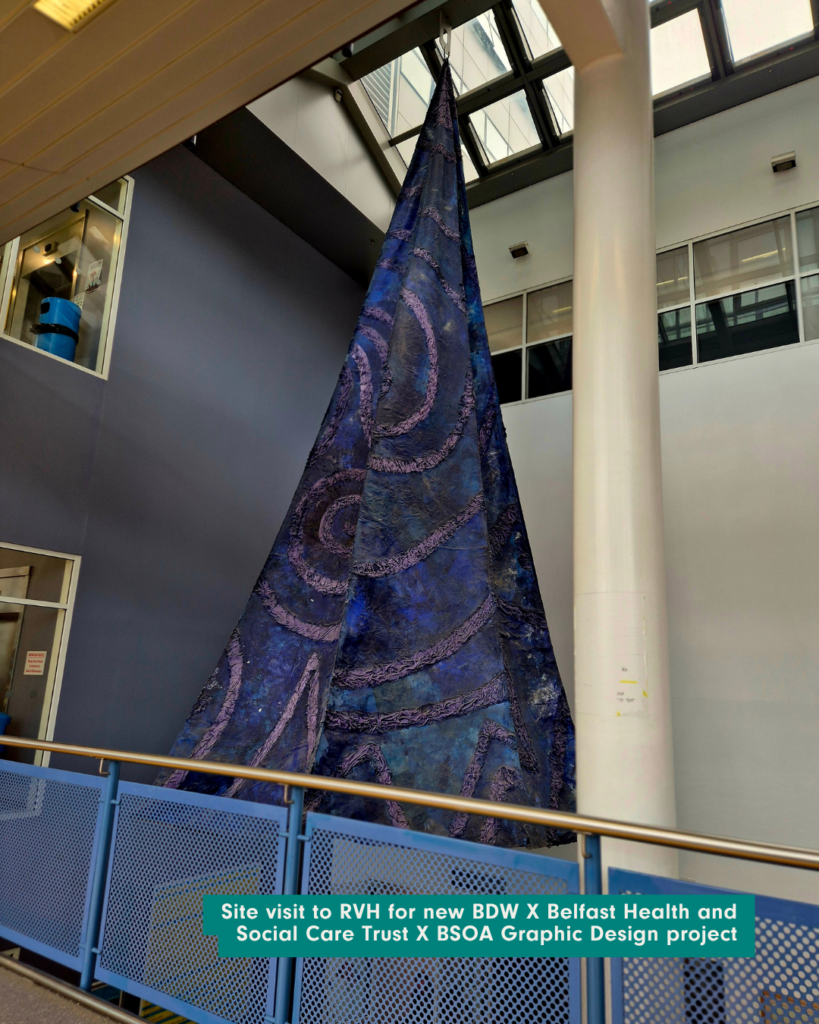
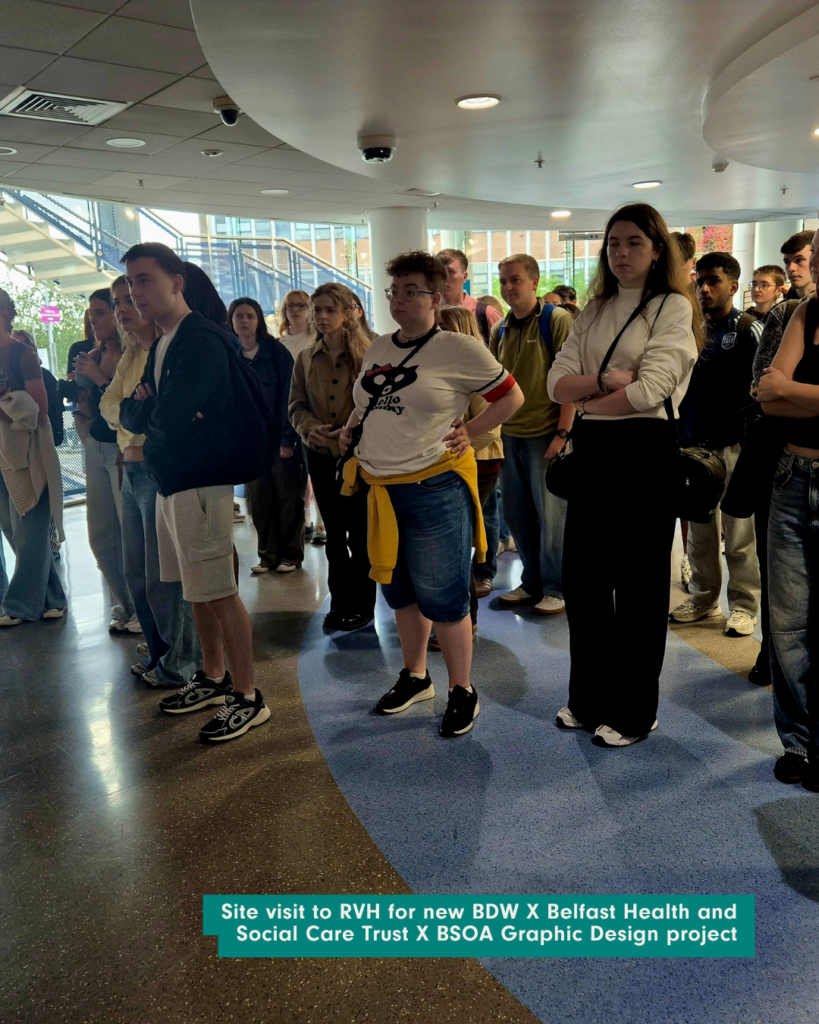
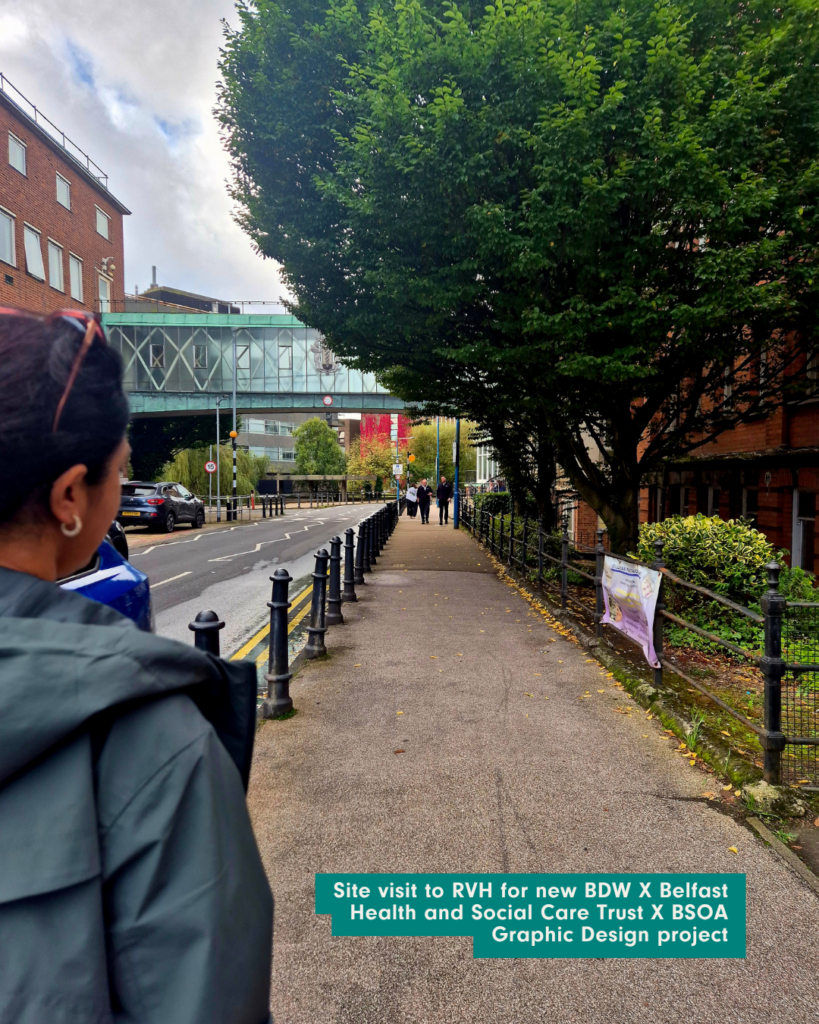
A brand new Blick/ Belfast Design Week project exploring graphic design with Belfast School of Art students to highlight and enhance heritage at the Royal Victoria Hospital. Looking at way finding from the main modern lobby through to the Victorian corridor and heritage space, as well as enhancing current heritage displays and signage and enhancing visitor engagement with heritage, as well as exploring potential technological engagement with RVH heritage.
This collaboration is part of a new Belfast Trust project called RVH 125 which marks the 125th anniversary of the opening of the hospital on the Grosvenor Road site in July 2028. Following this site visit the students are working on a body of work to be exhibited during Belfast Design Week 2027.

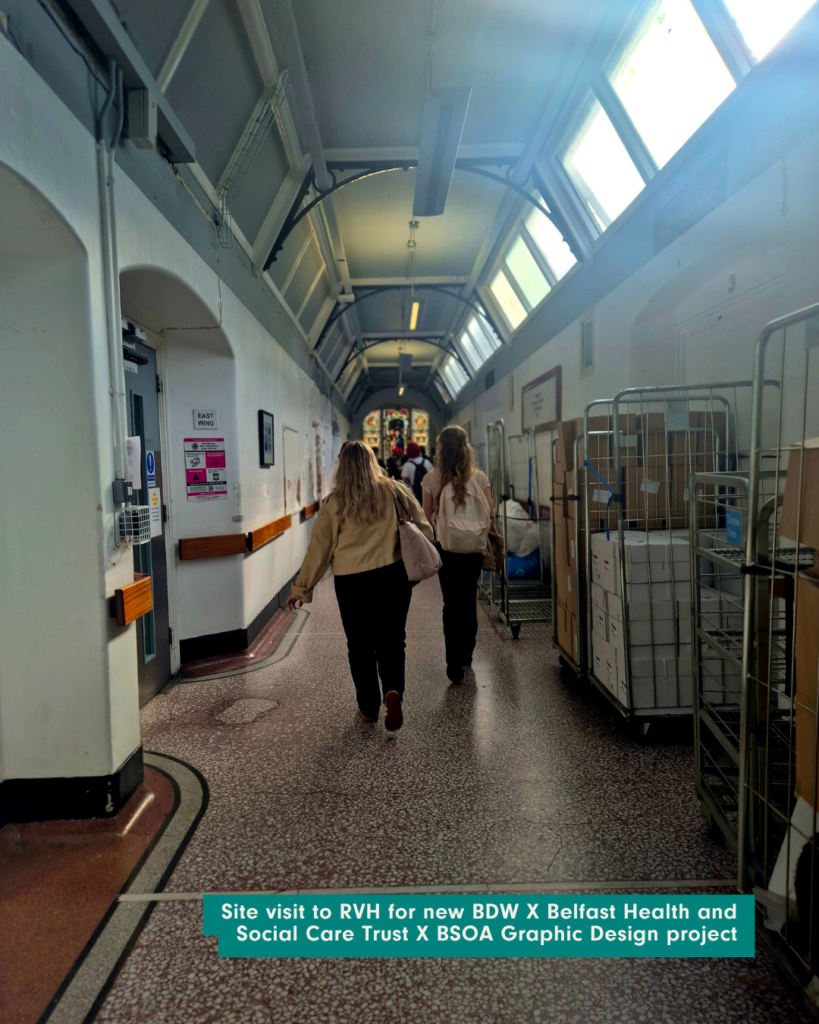
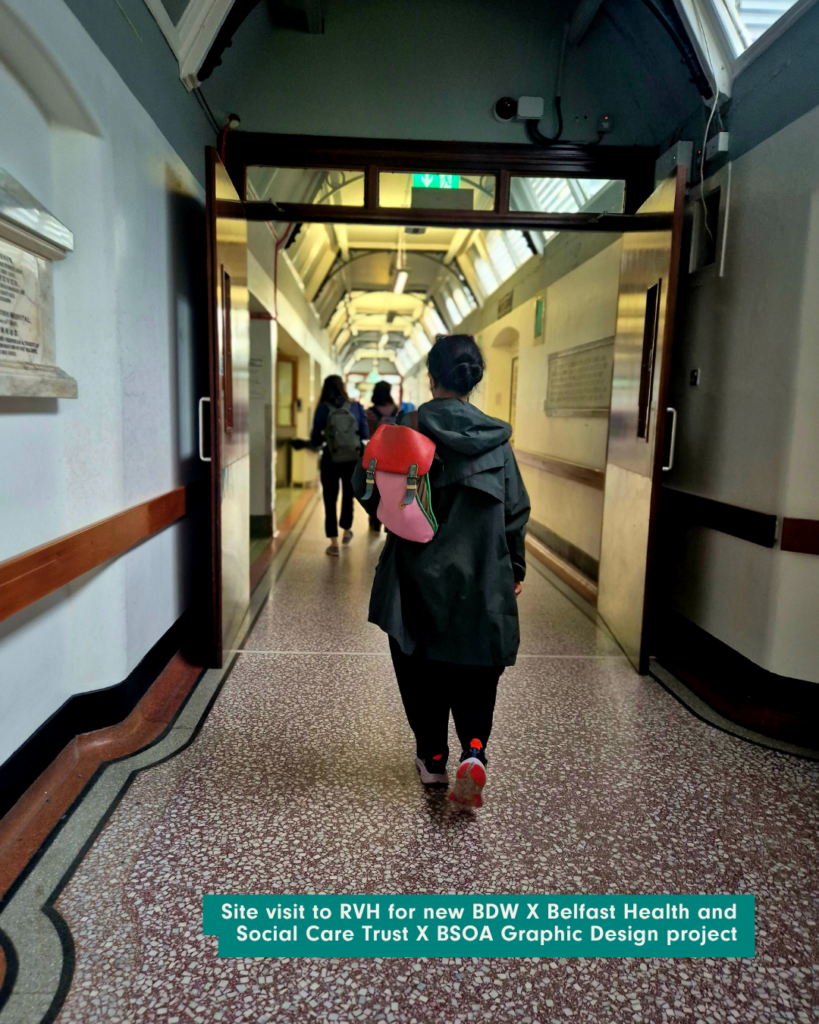
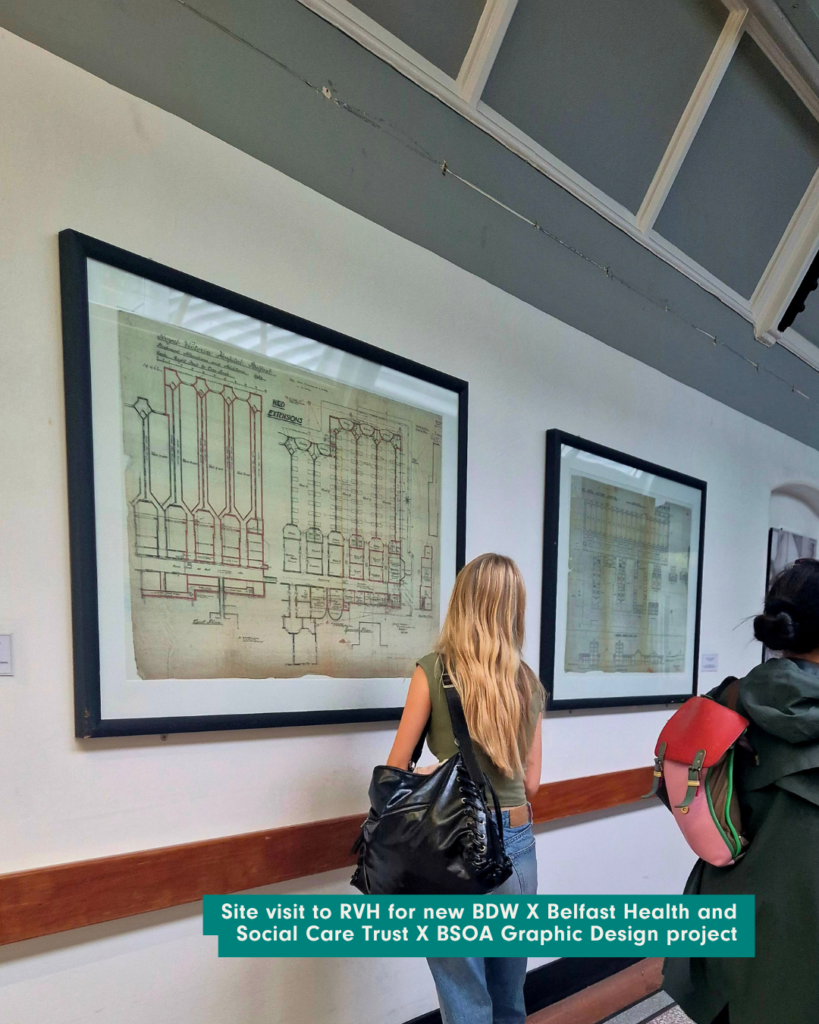
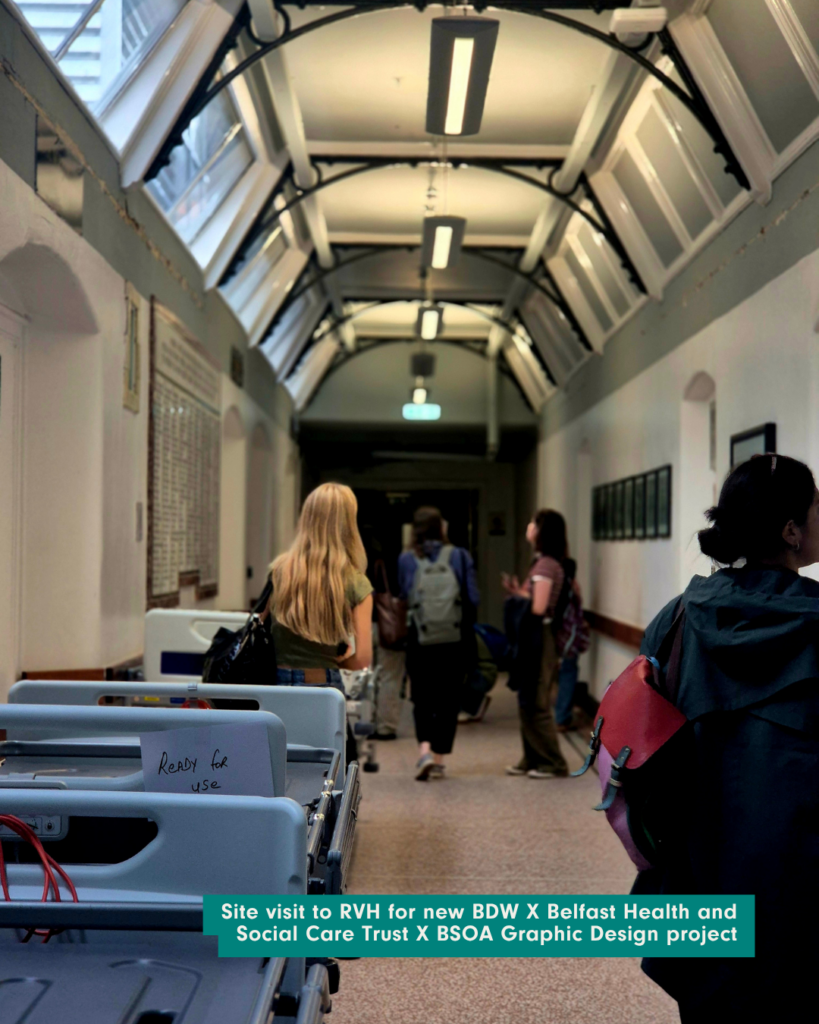
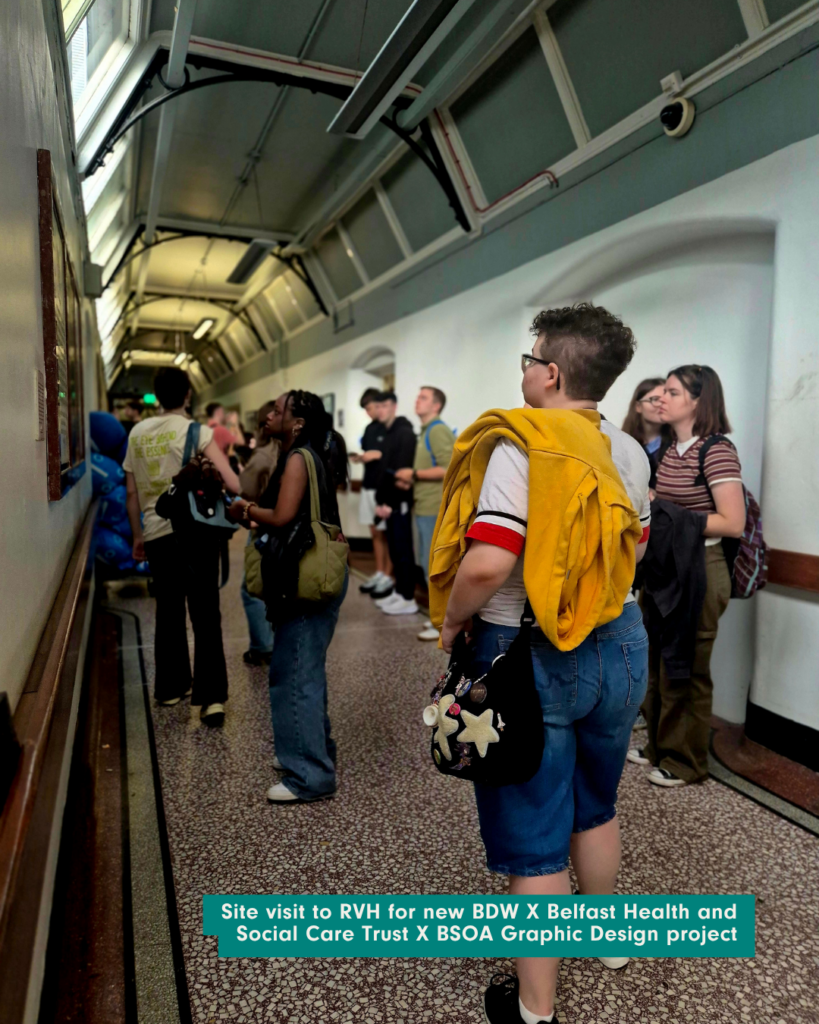
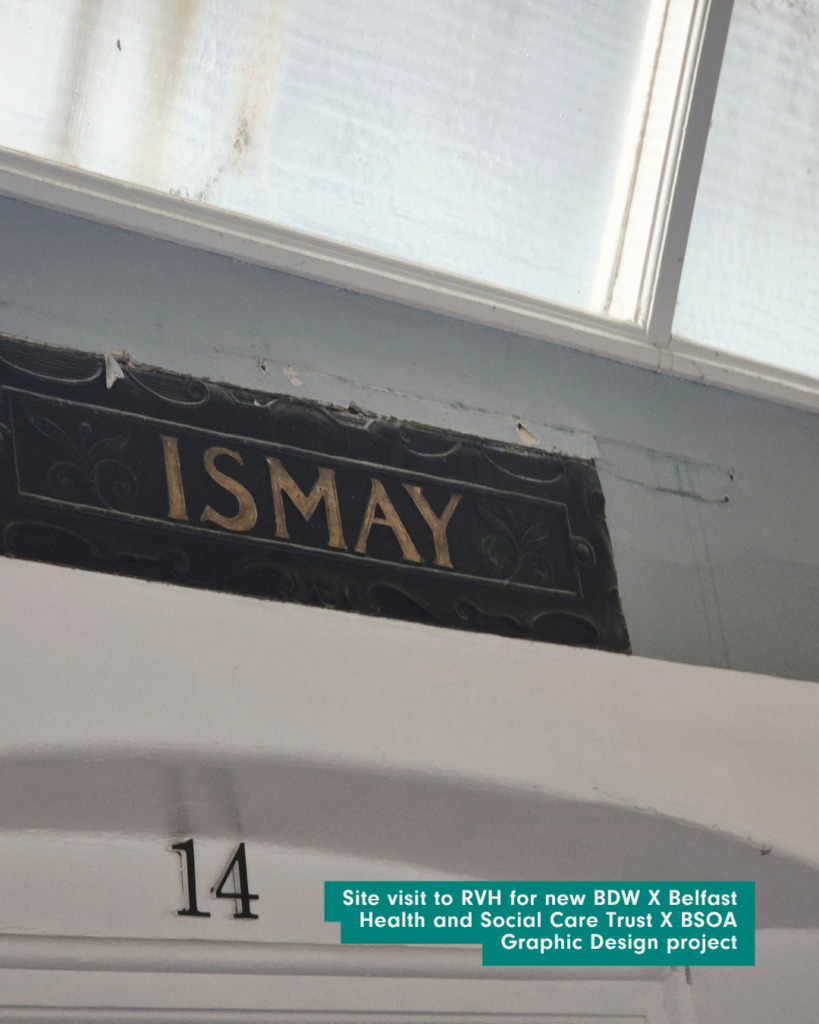
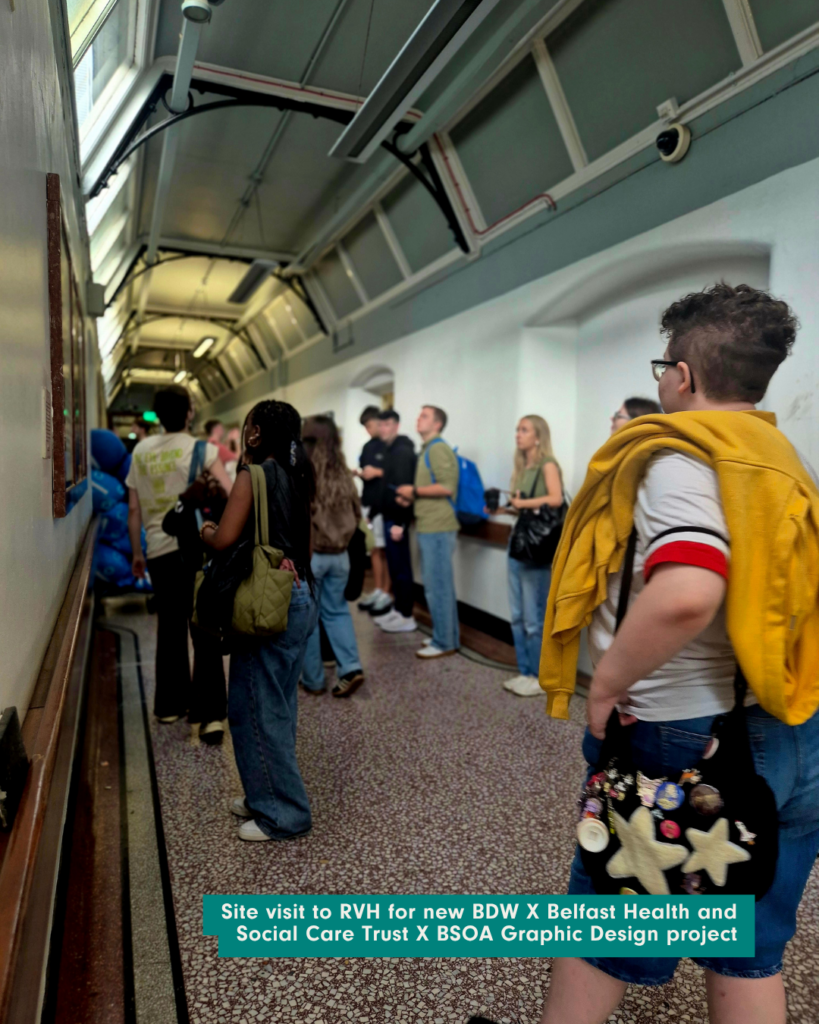
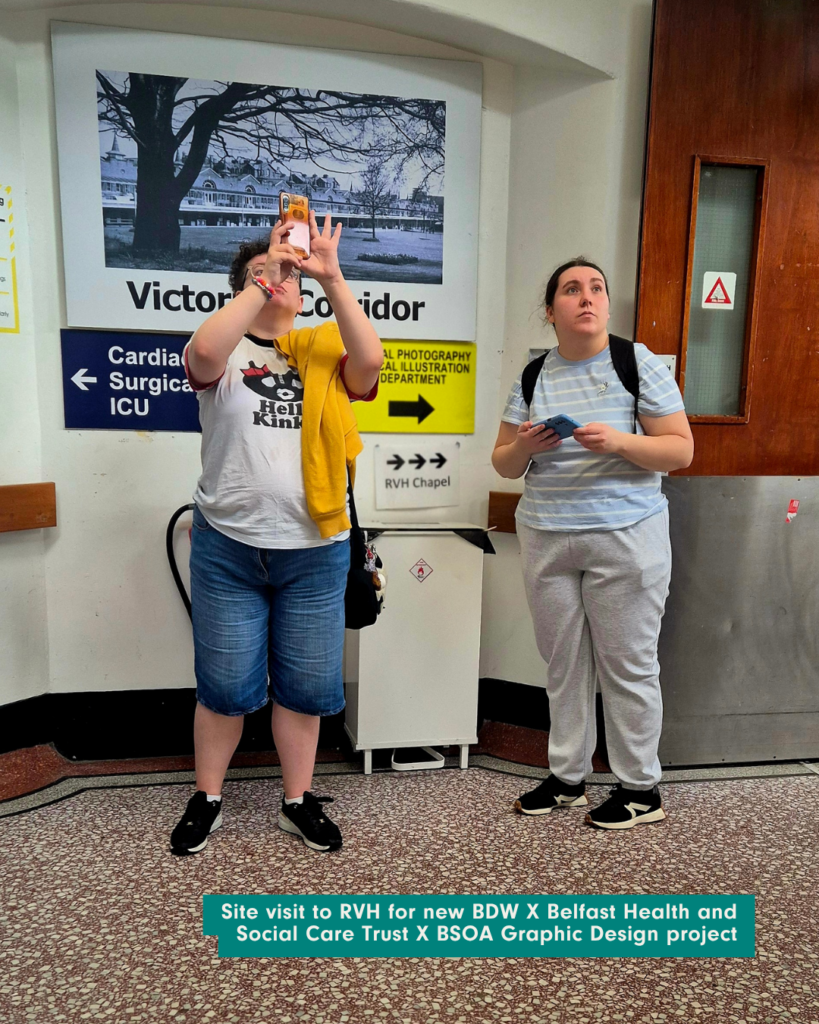
Historical background
- The hospital was originally located on Frederick Street, first called the Belfast General Hospital, then the Belfast Royal Hospital, before becoming the Royal Victoria Hospital.
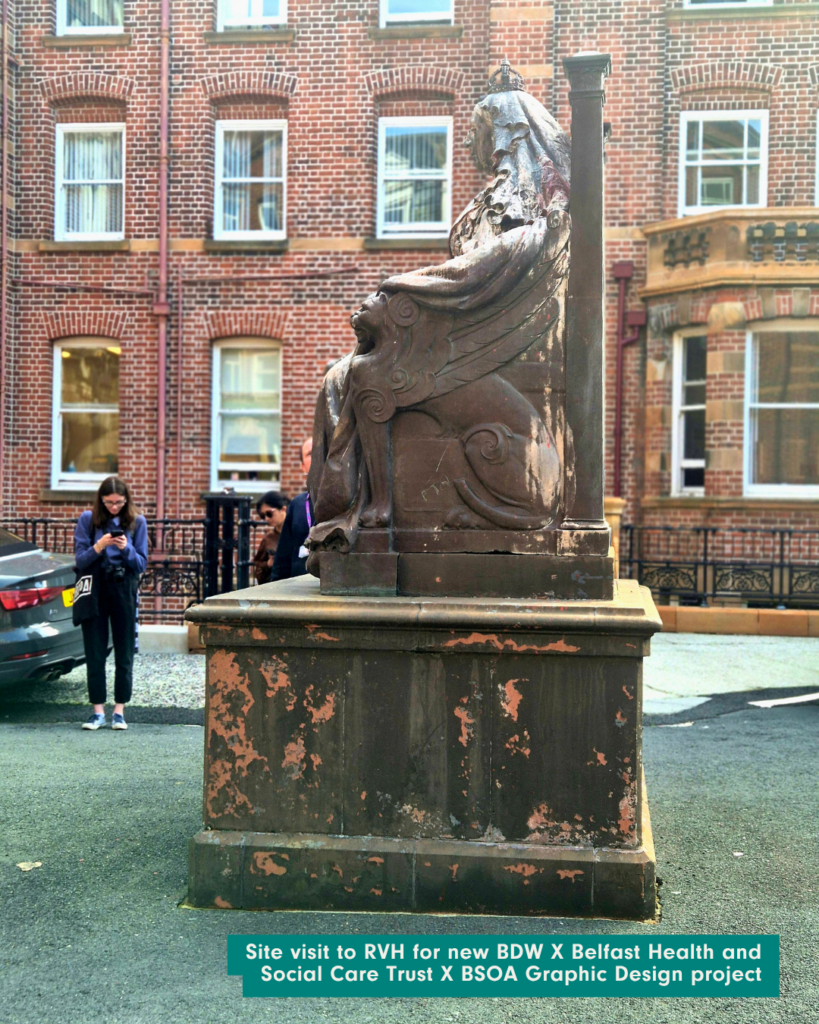
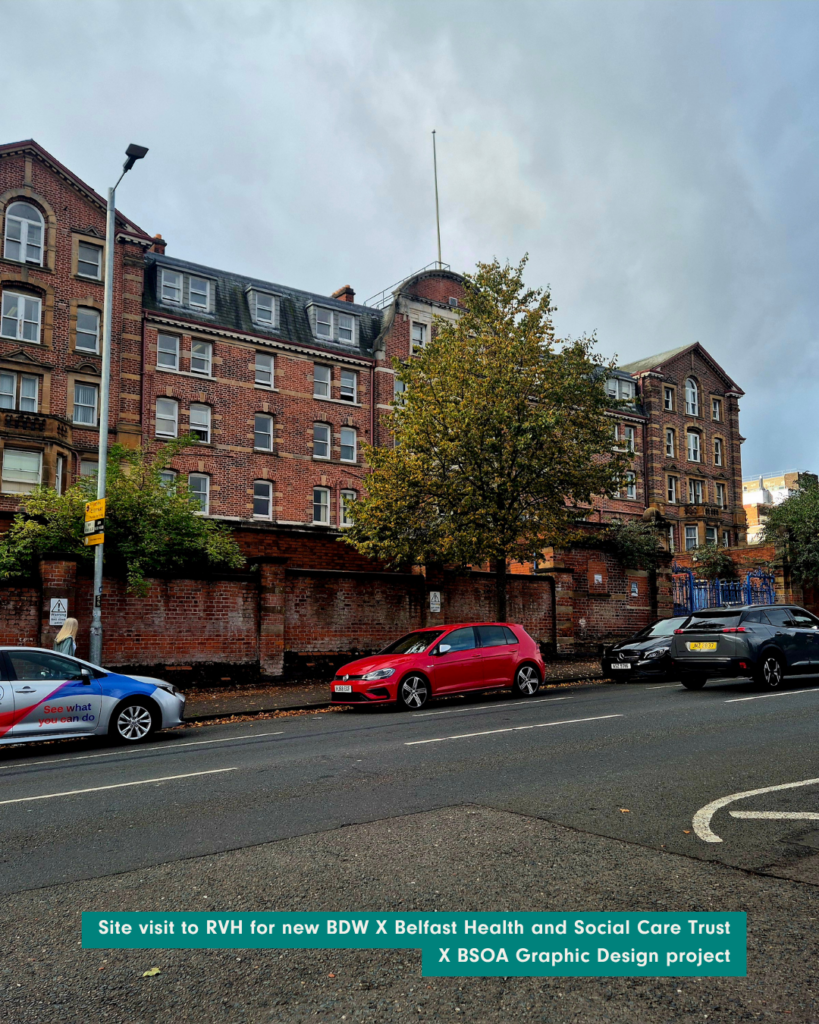
- In July 1903, it moved to its new premises off the Grosvenor Road, named after Queen Victoria who had died in 1901.
Belfast at the time was Ireland’s largest and most prosperous city, having gone through a major population boom through the 1800s. There were rapidly expanding industries including the largest linen mills in the world, the famous shipyards and numerous smaller industries including ropemaking, distillers, breweries, mineral water and more. - The expanding population faced a low life expectancy and poor health – alongside workplace accidents in the heavy industrial sites, there was poor sanitation and epidemics like cholera and typhoid. Sporadic sectarian violence also complicated the picture, eventually building up to the outbreak of major conflict from the late 1960s on.
Building the hospital in 1903 required a major fundraising effort involving well-known figures in Belfast including William and Margaret Pirrie, Edward Harland, Gustav Wolff, Thomas Ismay and other major industrialists, merchants and wealthy families in the city. - Fundraising also reached ordinary people: individuals subscribed with regular donations or gifted small amounts through workplace fundraisers and on-street collections.
- RVH started out with 20 ‘Nightingale’ wards projecting out from a single 400ft corridor.
- Underneath the corridor was an air conditioning duct (called the plenum ventilation system), which provided the first air conditioning to a public building in the world.
- The Royal Maternity Hospital and the Children’s Hospital both moved to the Grosvenor Road site in the 1930s and the Royal continued to expand through the 20th century. It would become the regional centre for healthcare, serving people from all over Northern Ireland, not just Belfast.
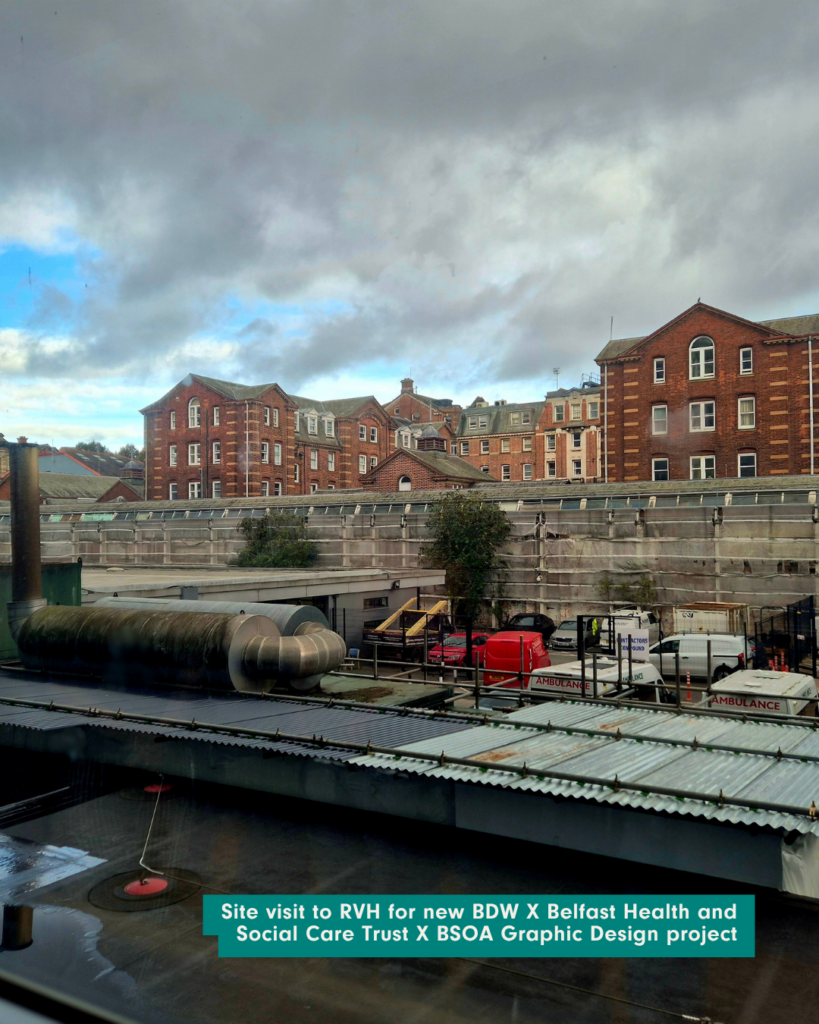
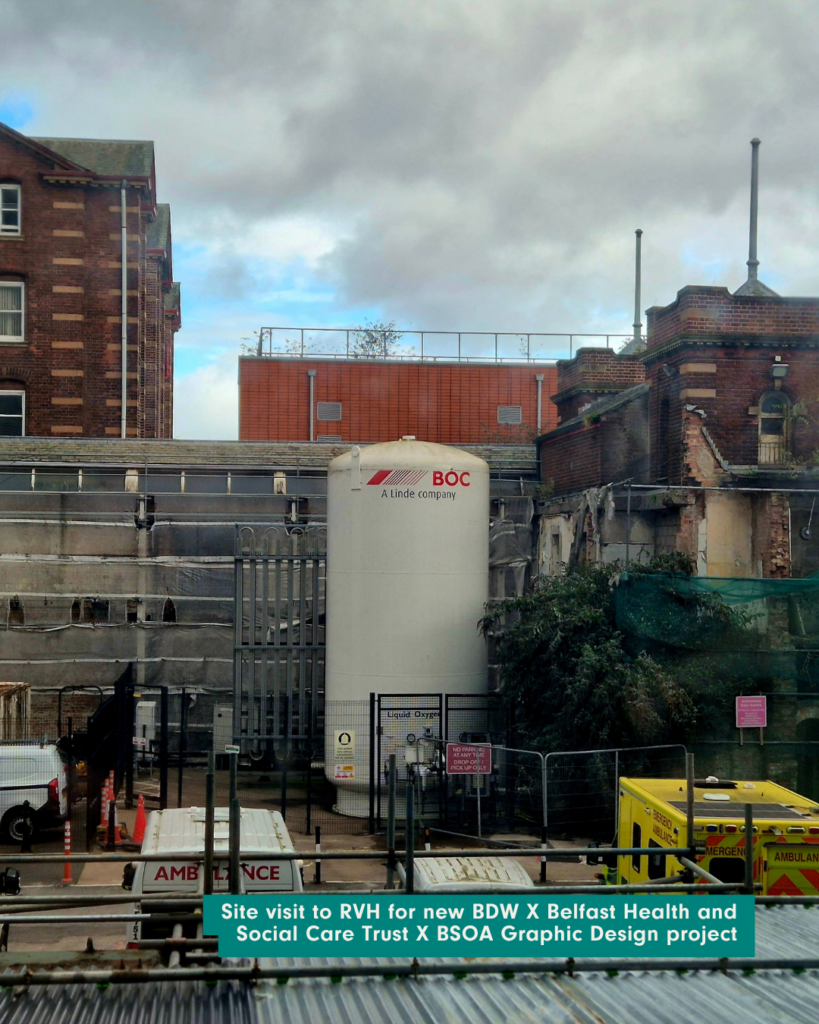
- In the early 2000s, the original 20 Nightingale wards were demolished to make way for the new Phase One building and other modern facilities. The original ‘Victorian Corridor’ still stands, as part of a series of original 1903 listed buildings on the site.